
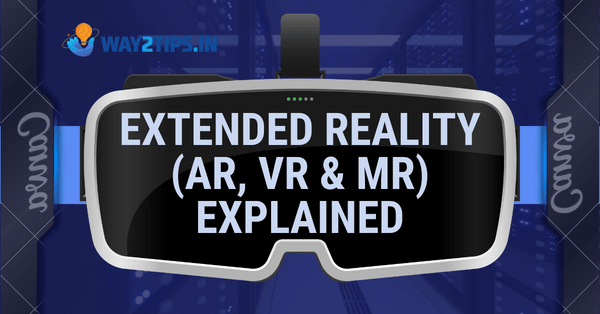
Extended Reality (XR) is an umbrella term that covers immersive technologies designed to blend the physical and digital worlds. It includes Augmented Reality (AR), Virtual Reality (VR), and Mixed Reality (MR). Together, these technologies are transforming how we learn, work, shop, train, and entertain.
This article explains XR in simple terms, explores each technology in detail, highlights real-world applications, and looks at the future of immersive experiences.
What Is Extended Reality (XR)?
Extended Reality refers to all technologies that enhance or replace our perception of the real world with digital elements. XR spans a spectrum:
- AR adds digital content to the real world
- VR fully immerses users in a virtual environment
- MR blends real and virtual worlds where both interact in real time
- AR VR MR technologies explained
XR aims to create more natural, interactive, and engaging experiences than traditional screens.
Augmented Reality (AR)
What Is AR?
Augmented Reality overlays digital information—such as images, text, animations, or 3D models—onto the real world. Users can still see their physical surroundings while interacting with virtual elements.
Common AR Devices
- Smartphones and tablets (camera-based AR)
- AR smart glasses
- Head-up displays (HUDs)
Real-World Applications of AR
- Retail & E-commerce: Try-before-you-buy experiences for clothes, furniture, and accessories
- Education: Interactive learning with 3D models and visual explanations
- Navigation: AR directions layered over real streets
- Maintenance & Repair: Step-by-step visual instructions for technicians
- Marketing: Interactive brand campaigns and product demos
Advantages of AR
- Easy to access via mobile devices
- Enhances real-world environments
- Minimal hardware investment
Limitations of AR
- Limited immersion
- Dependent on camera quality and lighting
Virtual Reality (VR)
What Is VR?
Virtual Reality places users inside a fully computer-generated environment. Wearing a VR headset blocks out the real world and replaces it with a simulated one, allowing users to look around and interact as if they were physically present.
Common VR Devices
- VR headsets (wired or standalone)
- Motion controllers
- Haptic gloves and accessories
Real-World Applications of VR
- Gaming & Entertainment: Fully immersive gaming experiences
- Training & Simulation: Safe environments for pilots, surgeons, and industrial workers
- Education: Virtual classrooms and field trips
- Healthcare: Pain management, therapy, and rehabilitation
- Architecture & Real Estate: Virtual walkthroughs of buildings
Advantages of VR
- High level of immersion
- Ideal for simulations and experiential learning
Limitations of VR
- Requires specialized hardware
- Can cause motion sickness for some users
- Isolates users from the real world
Mixed Reality (MR)
What Is MR?
Mixed Reality combines elements of both AR and VR. Digital objects are not just overlaid onto the real world—they are anchored to it and can interact with physical objects in real time.
For example, a virtual object can sit on a real table, respond to hand gestures, and remain fixed in place as you move around.
Common MR Devices
- Advanced MR headsets
- Spatial mapping sensors
- Gesture and voice recognition systems
Real-World Applications of MR
- Manufacturing: Visualizing machinery and workflows in real environments
- Healthcare: Interactive 3D anatomy and surgical planning
- Design & Engineering: Collaborative 3D prototyping
- Remote Collaboration: Shared virtual workspaces with real-world awareness
Advantages of MR
- Combines immersion with real-world awareness
- Enables complex interactions between digital and physical objects
Limitations of MR
- Expensive hardware
- Limited consumer adoption compared to AR and VR
Key Differences Between AR, VR, and MR
| Feature | AR | VR | MR |
|---|---|---|---|
| Real World Visible | Yes | No | Yes |
| Level of Immersion | Low to Medium | High | High |
| Interaction with Physical World | Limited | None | Advanced |
| Hardware Cost | Low | Medium | High |
Industries Transformed by Extended Reality
Extended Reality is making a significant impact across industries:
- Education & Training: Immersive, hands-on learning
- Healthcare: Improved diagnosis, treatment, and training
- Manufacturing & Engineering: Faster design and safer operations
- Retail & Marketing: Personalized and interactive understanding
- Entertainment & Media: New forms of storytelling
Challenges of Extended Reality
Despite its potential, XR faces challenges:
- High development and hardware costs
- Privacy and data security concerns
- User comfort and accessibility
- Need for skilled content creators
The Future of Extended Reality
The future of XR is promising. As hardware becomes lighter, more affordable, and more powerful, XR will become part of everyday life. Integration with Artificial Intelligence, 5G, and Digital Twins will enable smarter, more responsive immersive experiences.
From virtual workplaces to immersive education and next-generation entertainment, Extended Reality is shaping the future of human–computer interaction.
Conclusion
Extended Reality—through AR, VR, and MR—is redefining how we interact with technology. Each has unique strengths and applications, and together they form a powerful toolkit for immersive digital experiences.
As adoption grows across industries, XR is set to become a core technology driving innovation, efficiency, and engagement in the digital era.
About the Author