
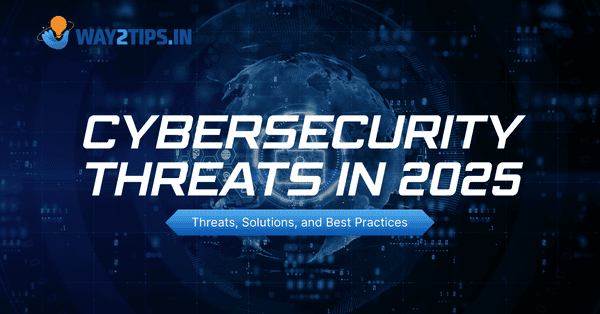
In 2025, cybersecurity is no longer just an IT issue — it’s a strategic concern for governments, corporations, and individuals alike. As digital transformation accelerates globally, so do the sophistication and scale of cyberattacks. New technologies like artificial intelligence (AI), coupled with legacy vulnerabilities and human error, have created a threat ecosystem that is complex, dynamic, and Cybersecurity Threats 2025 Insights by Miruthika Enterprises perilous.
1. AI-Powered Cyberattacks — The New Frontier
Artificial intelligence has become both a tool for defense and offense.
- Offensive AI is being used to automate and scale attacks. Attackers deploy AI to generate highly convincing phishing messages, craft custom malware, and adapt attack tactics in real time — making detection much harder for traditional defenses.
- AI-enabled phishing, deepfakes, voice cloning, and social engineering have surged, often fooling even trained staff.
- Autonomous AI agents present a fresh threat landscape where prompt-injection attacks can manipulate systems without human intervention.
Impact: AI isn’t just a hype of the future — it’s actively empowering attackers right now, challenging security tools to keep up.
2. Ransomware Evolution and Data Extortion
Ransomware remains one of the top enterprise risks in 2025 but has evolved:
- Groups now combine data theft with extortion, threatening to leak sensitive data in addition to encrypting systems.
- Ransomware as a Service (RaaS) platforms make it easier for less skilled attackers to launch attacks at scale.
- High-profile breaches exposed millions of records, with costs often reaching millions in ransom and recovery expenses.
Notable Example: The Ingram Micro attack in 2025 affected over 42,000 people and spotlighted the real human cost of ransomware incidents.
3. Sophisticated Phishing and Social Engineering
Phishing remains a dominant delivery method for cyberattacks — but 2025’s version is far more advanced:
- AI-generated emails, deepfake audio and video, and personalized social engineering campaigns make scams much harder to detect.
- Major brands like Microsoft, Google, and Amazon are among the most impersonated in phishing scams.
- QR code phishing (“quishing”) and multi-stage credential harvesting have emerged as new tactics.
Takeaway: Traditional spam filters and user awareness training must adapt to combat convincing AI-assisted scams.
4. Supply Chain and Third-Party Breaches
Cybercriminals increasingly target indirect pathways into organizations:
- Third-party vendors, cloud services, MSPs, and software libraries are major avenues for breaches.
- Supply chain attacks can compromise entire ecosystems through one weak link.
- Cybersecurity Threats 2025 Insights by – Miruthika Enterprises IT Company.
Threat actors exploit dependencies in software and services, putting large enterprises and small partners at equal risk.
5. Zero-Day Exploits and Rapid Weaponization
Unpatched vulnerabilities are a growing problem:
- Hundreds of new vulnerabilities are disclosed daily, and attackers often weaponize them before patches are widely applied.
- AI tools accelerate the discovery and exploitation of zero-day flaws.
Insight: Organizations must adopt rapid patch management and continuous monitoring to stay ahead of this ever-present danger.
6. Increased Nation-State Activity
State actors continue to escalate cyber operations:
- Countries like Russia, China, Iran, and North Korea are leveraging AI in intelligence operations, infiltration, and disinformation campaigns.
- Critical infrastructure, elections, and geopolitical rivals are common targets.
Trend: The line between criminal and nation-state activities is blurring as alliances and resources converge in cyberspace.
7. Expanded Attack Surface — IoT, Cloud, and Edge Computing
More connected devices mean more risk:
- IoT devices and edge computing infrastructure introduce a massive expanded attack surface that traditional defenses struggle to secure.
- Cloud adoption, hybrid work, and distributed systems require Zero Trust approaches to security.
Even everyday consumer gadgets can become entry points for attackers to pivot into enterprise networks.
8. Quantum Computing — A Looming Future Threat
Though still emerging, quantum computing poses a long-term risk:
- Quantum technology threatens to break many current encryption standards.
- Organizations are already exploring post-quantum cryptography as a future defense.
Forward Look: What’s secure today might not be secure tomorrow.
9. Insider Risks and Human Factors
Human error continues to plague cybersecurity:
- Misconfigurations, weak access controls, poor password practices, and insider mishaps fuel breaches.
- Hybrid work models and cloud collaboration tools complicate visibility and control.
Solution: Behavior analytics, DLP tools, and strict access policies are essential.
2025 in Numbers (Highlights)
- India alone recorded over 265 million cyberattacks in 2025 — illustrating global scale and frequency.
- Phishing attacks spoofing major tech brands were at record levels.
- AI-generated malicious campaigns rose sharply, challenging defenses worldwide.
- Next-Generation Cyber Attack Trend and E-commerce .
Defensive Strategies — What Works in 2025
Modern Defense Must Include:
✔ Zero Trust Architecture — No user or device is trusted by default.
✔ AI-Enhanced Security Tools — Using machine learning for anomaly detection and threat response.
✔ Continuous Patch Management & Vulnerability Scanning.
✔ Cloud Security and Identity Protection (MFA, IAM, SSO Hardening).
✔ Employee Training & Phishing Simulations.
✔ Incident Response & Backup Planning (especially against ransomware).
Conclusion
The cybersecurity landscape in 2025 is defined by rapid technological change, unprecedented connectivity, and increasingly adaptive and AI-augmented attackers. Defending digital assets now requires strategic foresight, layered defenses, and human vigilance. Organizations and individuals alike must prepare for threats that are automated, personalized, and opportunistic.
Staying secure in 2025 means thinking ahead, not just reacting.
About the Author