
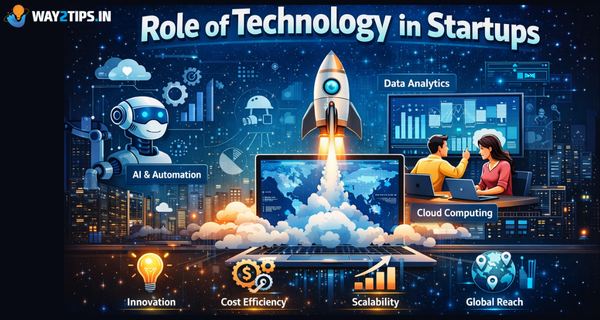
Technology plays a transformative role in shaping modern startups. From ideation to scaling operations, technology acts as the backbone that enables innovation, efficiency, and competitive advantage. In today’s fast-paced digital economy, startups that strategically leverage technology are more likely to survive, grow, and disrupt traditional industries.
1. Technology as a Foundation for Innovation
Startups are often built around innovative ideas that solve real-world problems. Technology allows entrepreneurs to:
- Develop digital products and services
- Automate processes
- Create scalable business models
- Deliver solutions faster than traditional businesses
Emerging technologies such as Artificial Intelligence (AI), Machine Learning (ML), Blockchain, and Cloud Computing have opened new opportunities for startups to build disruptive solutions across industries like healthcare, fintech, education, and e-commerce.
For example, cloud platforms enable startups to launch products without investing heavily in physical infrastructure. This significantly reduces initial costs and allows founders to focus more on product development and customer acquisition.
2. Cost Efficiency and Resource Optimization
Startups typically operate with limited budgets and small teams. Technology helps them maximize productivity while minimizing expenses.
- Cloud services eliminate the need for expensive servers.
- Automation tools reduce manual workload.
- Project management software improves team collaboration.
- Digital marketing platforms reduce advertising costs compared to traditional marketing.
By using SaaS (Software as a Service) solutions, startups can access enterprise-level tools at affordable subscription rates.
3. Enhanced Customer Experience
Customer experience is crucial for startup success. Technology enables startups to:
- Offer personalized services
- Provide 24/7 support through chatbots
- Analyze customer behavior using data analytics
- Improve engagement through mobile apps and social media
Data-driven insights allow startups to understand user preferences, optimize offerings, and build strong customer relationships.
For example, startups use CRM (Customer Relationship Management) systems to track customer interactions and improve service quality.
4. Faster Product Development
Technology accelerates product development cycles. With tools like agile development frameworks, DevOps practices, and rapid prototyping, startups can:
- Test ideas quickly
- Launch Minimum Viable Products (MVPs)
- Gather user feedback
- Iterate and improve continuously
This fast experimentation reduces risk and increases the chances of market fit.
5. Data-Driven Decision Making
Modern startups rely heavily on data analytics to guide decisions. Technology enables:
- Real-time performance tracking
- Market trend analysis
- Customer behavior monitoring
- Financial forecasting
Analytics tools help founders make informed decisions rather than relying on assumptions. This improves operational efficiency and strategic planning.
6. Scalability and Growth
One of the biggest advantages of technology is scalability. Digital infrastructure allows startups to grow rapidly without proportionally increasing costs.
For example:
- Cloud hosting scales automatically based on traffic
- E-commerce platforms manage thousands of transactions simultaneously
- Digital payment gateways simplify global transactions
Technology makes it easier for startups to expand into new markets and reach international audiences.
7. Competitive Advantage
Startups compete not only with other startups but also with established companies. Advanced technologies such as automation, AI, and big data analytics provide startups with:
- Faster service delivery
- More personalized offerings
- Lower operational costs
- Better strategic insights
Tech-enabled startups can disrupt traditional business models and capture market share quickly.
8. Remote Work and Global Talent Access
Technology enables startups to operate remotely. Collaboration tools like video conferencing, cloud storage, and communication platforms allow teams to work from anywhere.
Benefits include:
- Access to global talent
- Reduced office expenses
- Flexible work culture
- Increased productivity
- Startup Software Development
Remote-friendly startups can build diverse teams and scale operations globally.
9. Digital Marketing and Brand Building
Technology has revolutionized marketing strategies for startups. Digital channels such as:
- Social media
- Search engines
- Email marketing
- Content marketing
allow startups to reach targeted audiences at lower costs.
SEO (Search Engine Optimization), data analytics, and performance marketing tools help startups measure campaign effectiveness and improve ROI.
10. Security and Risk Management
With digital operations, cybersecurity becomes essential. Technology helps startups implement:
- Data encryption
- Secure payment systems
- Firewall protection
- Multi-factor authentication
Investing in security technology builds customer trust and protects sensitive information.
Conclusion
Technology is not just a support system for startups—it is the driving force behind innovation, growth, and sustainability. From reducing costs and improving efficiency to enabling global expansion and data-driven decisions, technology empowers startups to compete in dynamic markets.
Startups that embrace emerging technologies, prioritize digital transformation, and continuously adapt to technological advancements are better positioned for long-term success. In the modern business ecosystem, technology is no longer optional—it is essential.
About the Author