
Introduction
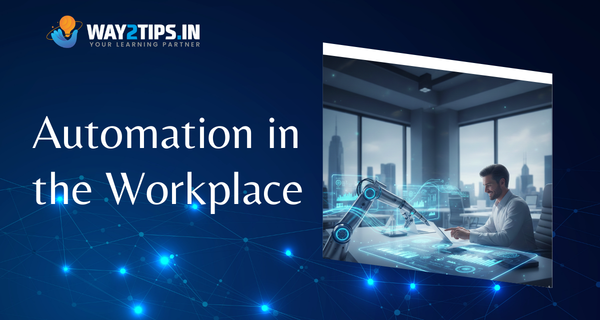
Automation in the workplace refers to the use of technology, software, robotics, and artificial intelligence to perform tasks with minimal human intervention. From manufacturing industries to IT companies and small businesses, automation is transforming how work gets done. Today, tools powered by Artificial Intelligence (AI), machine learning, and robotic process automation (RPA) are increasing efficiency, reducing costs, and improving accuracy.
As businesses aim for faster growth and higher productivity, workplace automation is becoming not just an option—but a necessity.
What is Workplace Automation?
Workplace automation is the process of using technology to complete repetitive, time-consuming, or complex tasks automatically. It can involve:
- Software automation (data entry, email responses)
- Robotic automation (assembly line robots)
- AI-powered automation (chatbots, predictive analytics)
- Workflow automation (task management systems)
Automation helps organizations streamline operations and focus more on strategic and creative work.
Types of Workplace Automation
1. Robotic Process Automation (RPA)
RPA uses software bots to handle repetitive tasks such as invoice processing, payroll management, and customer data updates.
2. Industrial Automation
Used in factories and production plants where machines handle manufacturing processes with minimal human involvement.
3. Artificial Intelligence Automation
AI systems analyze data, make decisions, and even interact with customers through chatbots and virtual assistants.
4. Business Process Automation (BPA)
BPA improves overall business workflows like HR onboarding, marketing campaigns, and CRM updates.
Benefits of Automation in the Workplace
1. Increased Productivity
Automated systems can work 24/7 without breaks, significantly increasing output.
2. Cost Reduction
Reduces labor costs and minimizes human errors that can lead to financial losses.
3. Improved Accuracy
Machines perform repetitive tasks with high precision, reducing mistakes.
4. Better Employee Focus
Employees can focus on creative, strategic, and decision-making tasks instead of repetitive work.
5. Faster Decision Making
Automation tools provide real-time analytics and reports to support quick business decisions.
Challenges of Workplace Automation
While automation offers many advantages, it also presents certain challenges:
- Initial investment costs can be high.
- Employees may fear job loss.
- Requires training and skill development.
- System failures or cybersecurity risks.
- Automation for Business growth.
Companies must balance automation with human expertise for best results.
Impact on Employment
Automation is reshaping job roles rather than completely eliminating jobs. Routine and repetitive tasks are most affected. However, new roles are emerging in:
- Data analysis
- AI development
- Robotics maintenance
- Cybersecurity
- Automation strategy management
Upskilling and continuous learning are essential for employees to stay relevant.
Automation Across Industries
Automation is widely used in various sectors:
- Manufacturing – Robotic assembly lines
- Healthcare – Automated patient records and diagnostics
- Finance – Fraud detection systems
- Retail – Inventory management and self-checkout systems
- IT & Software – Continuous integration and deployment systems
Every industry is adopting automation to improve efficiency and customer experience.
Future of Workplace Automation
The future of automation will be driven by advancements in:
- Artificial Intelligence
- Machine Learning
- Cloud Computing
- Internet of Things (IoT)
- Robotics
Human-machine collaboration will become more common. Instead of replacing workers, automation will enhance productivity and create smarter workplaces.
Conclusion
Automation in the workplace is transforming modern business operations. It increases productivity, reduces errors, and helps organizations stay competitive in a rapidly changing world. However, successful implementation requires strategic planning, employee training, and ethical considerations.
The future workplace will not be fully automated—but it will be intelligently automated, where humans and machines work together for greater success.
About the Author