
The devastating Nepal Flash Floods 2026 have caused widespread destruction across several parts of the country, with the death toll rising sharply as rescue teams continue recovering bodies from flood-affected areas.
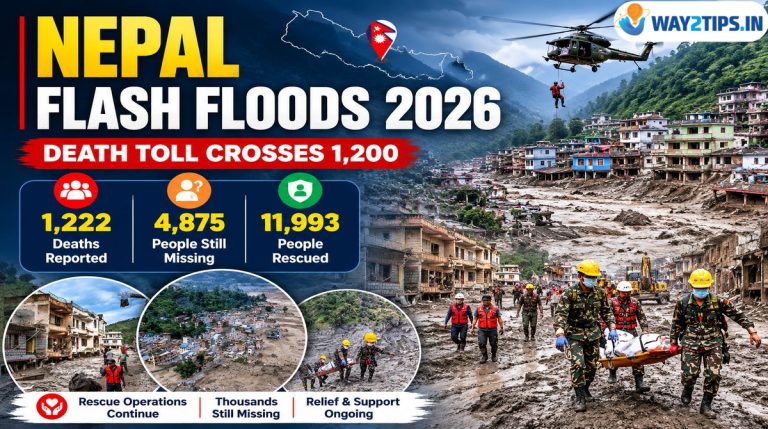
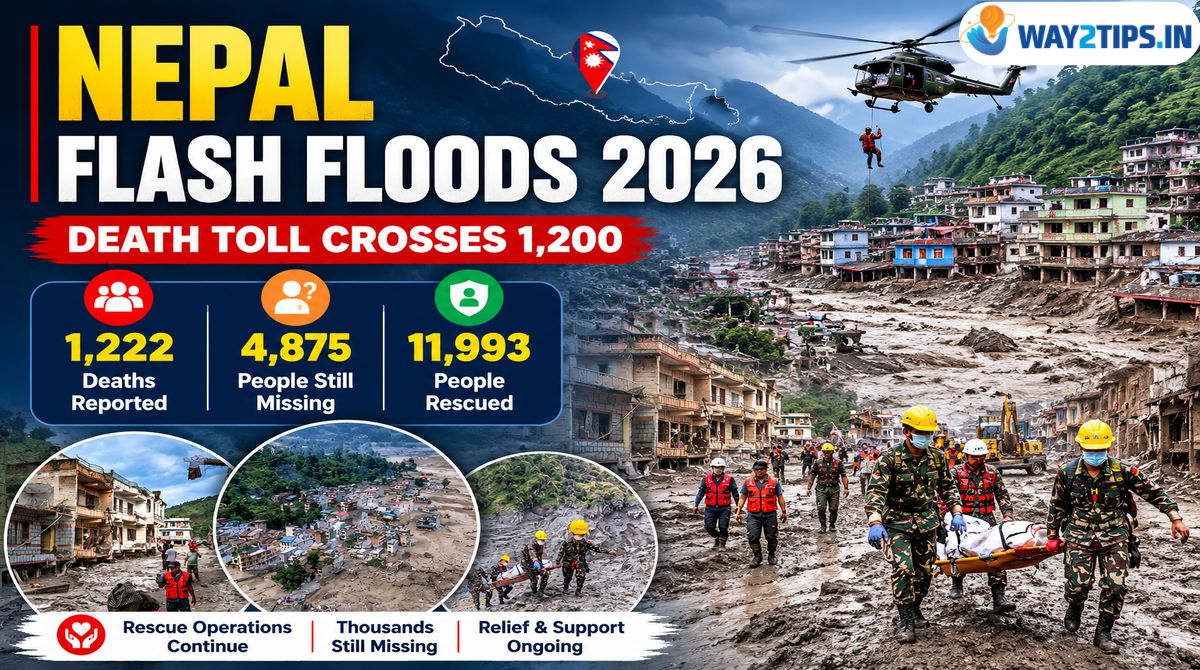
According to the latest figures reported by Nepal Police, 1,222 people have died in Nepal, while 4,875 people remain missing nearly a week after the catastrophic floods. The wider Nepal-Tibet disaster has pushed the combined death toll to more than 1,240.
The disaster has severely affected towns, villages, roads and bridges, leaving rescue teams facing difficult terrain and damaged infrastructure.
Nepal Flash Floods: Latest Death Toll and Missing Persons
The latest reported figures show the scale of the disaster:
- 1,222 deaths reported in Nepal
- 4,875 people remain missing
- 583 of those reported missing are foreigners
- 11,993 people have been rescued
- Around 21,314 security personnel have been mobilised
- Rescue operations are being conducted through both helicopters and land routes
Authorities continue to search for people who may be trapped or missing in flood-affected areas.
District-Wise Death Toll
Several districts have recorded significant numbers of deaths following the flash floods.
According to disaster management authorities, the reported deaths include:
- Chitawan: 348
- Nawalparasi East: 218
- Nawalparasi West: 208
- Nuwakot: 155
- Rasuwa: 127
- Gorkha: 69
- Dhading: 60
- Tanahu: 38
Rescue and recovery teams continue to work in these districts as authorities assess the full extent of the damage.
Thousands Still Missing After the Disaster
One of the biggest challenges facing authorities is locating thousands of missing people.
Of the 4,875 people reported missing, around 583 are foreigners. Communication networks and transport infrastructure have been severely affected in some areas, making it difficult for families and authorities to establish contact with people who were in the affected regions.
The continuing search has involved security personnel, local residents and rescue teams working across difficult terrain.
Nearly 12,000 People Rescued
Joint rescue operations involving Nepal’s security forces have helped thousands of people escape affected areas.
So far, approximately 11,993 people have been rescued using helicopters and land routes.
The Nepal Army and other security personnel have been working to reach communities cut off by destroyed roads, bridges and rising rivers.
Helicopters have been particularly important for reaching locations where ground access remains difficult.
Makeshift Zipline Helps Survivors Cross the Trishuli River
The destruction of bridges has created another major challenge for communities trying to move between affected areas.
In Bidur, Nepal Army personnel installed a temporary cable crossing over the swollen Trishuli River.
The approximately 250-metre crossing has provided an emergency route for residents who need to move across the river to access medical treatment, medicines, food and other essential supplies.
Residents and soldiers have been helping people cross the river using the makeshift system while normal transportation routes remain disrupted.
India Sends Rescue and Relief Support
India has also increased its assistance to Nepal following the disaster.
The fifth Indian aircraft carrying relief supplies landed in Nepal on September 2, according to India’s Ministry of External Affairs.
The aircraft reportedly carried:
- An 11-member rescue team
- Specialised rescue equipment
- 5.5 tonnes of essential medicines
Indian officials also handed over relief material to the Government of Nepal as part of the ongoing humanitarian response.
The assistance is aimed at supporting Nepal’s rescue, medical and relief operations during the crisis.
China Reopens Road to Disaster Zone
The flooding also severely affected the area on the Chinese side of the Nepal border.
In Tibet’s Gyirong County, the flash floods resulted in 21 reported deaths, while hundreds of people remained missing.
China has reopened the main highway leading toward the Gyirong border crossing after flood damage had blocked access to the disaster zone.
The reopening of the road is expected to allow heavy machinery and additional rescue equipment to reach areas that were previously difficult to access.
Search teams equipped with life-detection equipment and search dogs have also been deployed.
Families Continue to Search for Missing Relatives
The disaster has left families across Nepal and neighbouring countries waiting for information about missing relatives.
Among those affected are Indian pilgrims who were travelling through areas near the Nepal-China border.
Communication disruptions have made the situation particularly difficult for families trying to determine whether their relatives are safe.
Authorities and rescue agencies continue to work toward identifying missing people and providing information to their families.
Environmental Concerns and Climate Change
The scale of the Nepal flash floods has also renewed discussion about climate change, disaster preparedness and development in the Himalayan region.
Environmental experts have raised concerns about the impact of infrastructure development, including hydropower projects and other construction activities, on fragile mountain ecosystems.
The increasing frequency and intensity of extreme weather events has also highlighted the need for stronger early-warning systems, climate-resilient infrastructure and improved disaster preparedness.
Rescue Operations Continue
Despite difficult conditions, thousands of security personnel remain involved in rescue and recovery efforts.
Search operations are continuing in areas where people may still be trapped, including locations affected by debris, damaged infrastructure and swollen rivers.
Authorities are also working to restore roads and other essential connections so that relief materials can reach isolated communities.
What Happens Next?
The immediate priority remains:
- Finding missing people.
- Rescuing survivors trapped in isolated areas.
- Providing medical assistance.
- Delivering food, water and medicines.
- Restoring roads and communication networks.
- Identifying recovered bodies.
- Supporting affected families.
- Assessing infrastructure damage.
- Improving access to remote disaster zones.
The final number of casualties could change as rescue teams reach more affected areas and authorities verify reports.
Nepal Flash Floods 2026: A Major Humanitarian Crisis
The Nepal flash floods of 2026 have become one of the country’s most serious recent disasters, with more than 1,200 deaths reported in Nepal and thousands of people still missing.
The rescue of nearly 12,000 people demonstrates the scale of the ongoing emergency response, while the continued search for missing people remains the most urgent challenge.
With roads and bridges damaged across several areas, Nepal’s security forces, local communities and international partners are continuing relief and rescue operations.
As authorities assess the destruction, the disaster is also likely to intensify discussions about climate resilience, Himalayan development, flood preparedness and early-warning systems.
Final Words
The situation in Nepal remains critical as rescue teams continue searching for missing people and providing assistance to survivors.
With 1,222 deaths reported in Nepal and 4,875 people still missing, the full impact of the disaster is yet to be determined.
Authorities are expected to continue updating casualty figures as search operations progress. Families and the international community are closely watching the rescue and relief efforts as Nepal works to recover from the devastating floods.
About the Author