
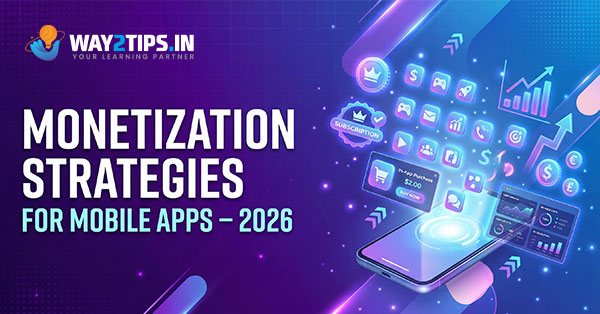
Mobile apps have transformed the way businesses engage with users, generate revenue, and build brand loyalty. With millions of apps available on the Google Play Store and Apple App Store, choosing the right monetization strategy is critical for long-term success.
In this comprehensive guide, we explore the most effective mobile app monetization strategies, their advantages, challenges, and how to select the best model for your app.
What is Mobile App Monetization?
Mobile app monetization refers to the methods and strategies used to generate revenue from an application. This can include direct payments from users, advertising revenue, subscription fees, affiliate marketing, or hybrid models.
The right monetization model depends on:
- Target audience
- App category
- User engagement level
- Market competition
- Long-term business goals
1. In-App Advertising
In-app advertising is one of the most common monetization strategies, especially for free apps.
Types of In-App Ads:
- Banner Ads – Small ads displayed at the top or bottom of the screen
- Interstitial Ads – Full-screen ads shown between activities
- Rewarded Video Ads – Users watch ads in exchange for rewards
- Native Ads – Ads integrated seamlessly into app content
Advantages:
- No upfront cost for users
- Easy integration with ad networks
- Scalable revenue
Challenges:
- Can affect user experience if overused
- Revenue depends on user traffic
Best suited for: Gaming apps, entertainment apps, news apps, and free utilities.
2. In-App Purchases (IAP)
In-app purchases allow users to buy additional content or features within the app.
Types of In-App Purchases:
- Consumables – Coins, lives, power-ups
- Non-consumables – Premium features, ad removal
- Subscriptions – Recurring access to services
Advantages:
- High revenue potential
- Flexible pricing strategies
- Encourages engagement
Challenges:
- Requires strong value proposition
- Platform commission fees
Best suited for: Gaming apps, productivity apps, fitness apps, and educational apps.
3. Subscription Model
The subscription model provides recurring revenue by charging users monthly or yearly.
Popular apps like Netflix and Spotify rely heavily on subscription-based monetization.
Benefits:
- Predictable recurring income
- Higher customer lifetime value (LTV)
- Strong user retention
Challenges:
- Requires continuous value delivery
- Higher churn risk
Best suited for: Streaming apps, SaaS apps, fitness platforms, and learning apps.
4. Freemium Model
In the freemium model, the basic app is free, but premium features are paid.
How It Works:
- Free core features
- Paid advanced tools
- Optional upgrades
Advantages:
- Attracts large user base
- Encourages product trials
- Gradual upselling
Challenges:
- Low conversion rate (typically 2–5%)
- Requires strategic feature gating
Best suited for: Productivity tools, SaaS apps, photo editing apps.
5. Paid Apps (Premium Model)
Users pay upfront to download the app.
Advantages:
- Immediate revenue
- No reliance on ads
- Higher perceived value
Challenges:
- Lower downloads
- High competition in app stores
Best suited for: Niche professional apps, premium utilities, specialized tools.
6. Affiliate Marketing
Apps can earn commission by promoting third-party products or services.
How It Works:
- Promote partner services
- Earn commission per sale or signup
- Integrate referral links
Advantages:
- No need to create products
- Passive revenue stream
Challenges:
- Requires trust
- Revenue depends on user conversion
Best suited for: Review apps, finance apps, travel apps, comparison platforms.
7. Sponsorship & Partnerships
Brands pay to be featured within your app.
Examples:
- Sponsored content
- Co-branded experiences
- Featured product placements
Benefits:
- High revenue potential
- Brand collaborations
Challenges:
- Limited to apps with strong traffic
- Must align with brand identity
8. E-commerce & Merchandise Sales
E-commerce and Merchandise Sales are Apps can sell physical or digital products directly.
Examples:
- In-app store
- Branded merchandise
- Digital downloads
Advantages:
- Direct revenue
- Higher margins
Best suited for: Lifestyle apps, fitness apps, influencer apps, brand-based apps.
9. Data Monetization (Ethical & Transparent)
Aggregated, anonymized user data can provide insights for research or partnerships.
⚠ Important: Must comply with privacy laws like GDPR and obtain clear user consent.
10. Hybrid Monetization Model
Many successful apps combine multiple strategies:
- Ads + In-app purchases
- Freemium + Subscription
- Subscription + Affiliate
Hybrid models diversify revenue and reduce risk.
How to Choose the Right Monetization Strategy
Consider the following factors:
1. Target Audience Behavior
Are users willing to pay upfront? Or do they prefer free apps with ads?
2. App Category
Gaming apps often succeed with IAP and ads, while productivity apps perform better with subscriptions.
3. Market Competition
If competitors are free, a paid model may struggle.
4. User Experience
Avoid aggressive monetization that harms engagement.
5. Revenue Goals
Short-term gains vs. long-term recurring income.
Emerging Monetization Trends (2026 & Beyond)
- AI-powered personalized ads
- Usage-based subscription pricing
- Microtransactions in non-gaming apps
- Creator-driven monetization ecosystems
- Blockchain & digital asset integration
- Digital marketing and SEO
Common Mistakes to Avoid
- Overloading users with ads
- Poor pricing strategy
- Ignoring analytics
- Not testing different models
- Failing to optimize retention
Final Thoughts
Choosing the right monetization strategy is not just about revenue — it’s about sustainability, user satisfaction, and long-term growth.
Successful apps focus on:
✔ Delivering consistent value
✔ Maintaining strong user experience
✔ Testing and optimizing revenue models
✔ Combining multiple strategies intelligently
Whether you are launching a startup app or scaling an existing platform, the right monetization model can significantly impact your profitability and market position.
About the Author