
Introduction
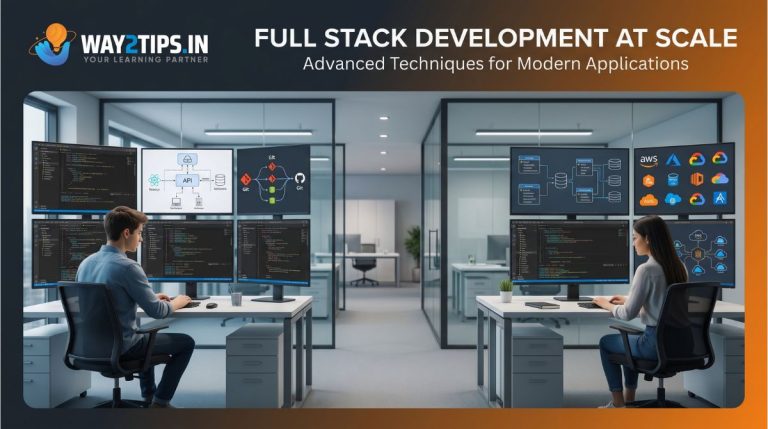
In today’s fast-paced digital world, Full Stack Development has become one of the most in-demand skills in the tech industry. Companies are looking for professionals who can handle both the front-end and back-end of web applications efficiently. A full stack developer bridges the gap between design, functionality, and performance, making them a valuable asset to any development team.
This article explores the essential skills you need to become a successful full stack developer, whether you are a beginner or an experienced programmer looking to upgrade your expertise.
What Is Full Stack Development?
Full stack development refers to the practice of working on both client-side (front-end) and server-side (back-end) parts of an application. A full stack developer understands how the entire web ecosystem works—from user interfaces to databases and servers , Full stack development company in India.
A typical full stack application includes:
- Front-end (UI/UX)
- Back-end (Server logic)
- Database
- APIs
- Deployment and hosting
Core Skills Required for Full Stack Development
1. Front-End Development Skills
Front-end development focuses on what users see and interact with.
Key technologies include:
- HTML – Structure of web pages
- CSS – Styling, layouts, and responsiveness
- JavaScript – Interactivity and dynamic behavior
Modern Front-End Frameworks:
- React.js
- Angular
- Vue.js
Additional Front-End Skills:
- Responsive design (Flexbox, Grid)
- UI/UX basics
- Browser compatibility
- Performance optimization
2. Back-End Development Skills
Back-end development handles server logic, authentication, and data processing.
Popular Back-End Languages:
- JavaScript (Node.js)
- Python (Django, Flask)
- Java (Spring Boot)
- PHP (Laravel)
- Ruby (Ruby on Rails)
Core Back-End Concepts:
- RESTful APIs
- Authentication & authorization
- Server-side validation
- Business logic implementation
3. Database Management
Databases store and manage application data efficiently.
Types of Databases:
- Relational Databases: MySQL, PostgreSQL, SQL Server
- NoSQL Databases: MongoDB, Firebase, Cassandra
Important Skills:
- Database design
- Writing efficient queries
- Data relationships
- Indexing and optimization
4. Version Control Systems
Version control is essential for collaboration and code management.
Most Common Tool:
- Git
Platforms:
- GitHub
- GitLab
- Bitbucket
Key Concepts:
- Branching and merging
- Pull requests
- Code reviews
- Conflict resolution
5. APIs and Integration
Full stack developers often work with APIs to connect different systems.
Skills Needed:
- REST API development
- JSON and XML
- Third-party API integration
- Basic GraphQL knowledge
6. Deployment and Hosting
Knowing how to deploy applications is a critical full stack skill.
Hosting Platforms:
- AWS
- Google Cloud
- Azure
- Vercel
- Netlify
Related Skills:
- Domain management
- CI/CD pipelines
- Server configuration
- Environment variables
7. Basic DevOps Knowledge
While not mandatory, DevOps knowledge gives full stack developers an edge.
Useful Concepts:
- Docker & containers
- Linux basics
- Cloud infrastructure
- Monitoring and logging
8. Security Fundamentals
Security is a crucial part of full stack development.
Essential Security Practices:
- HTTPS and SSL
- Password hashing
- Protection against SQL injection & XSS
- Secure authentication systems
9. Problem-Solving and Debugging
Technical skills alone are not enough.
Soft Skills Matter:
- Logical thinking
- Debugging techniques
- Code optimization
- Understanding error logs
10. Continuous Learning Mindset
Technology evolves rapidly, and full stack developers must stay updated.
Ways to Keep Learning:
- Online courses
- Developer communities
- Open-source contributions
- Reading documentation and blogs
Career Opportunities in Full Stack Development
Full stack development opens doors to various roles, including:
- Full Stack Developer
- Web Developer
- Software Engineer
- Technical Lead
- Startup Founder
With experience, professionals can move into architect, DevOps, or product management roles.
Conclusion
Full stack development is a powerful and versatile career path that combines creativity with technical expertise. By mastering front-end and back-end technologies, databases, APIs, and deployment strategies, you can build complete, scalable applications from start to finish.
Whether you’re starting your journey or enhancing your skills, investing in full stack development can lead to long-term career growth and exciting opportunities in the tech world.
About the Author