
Introduction
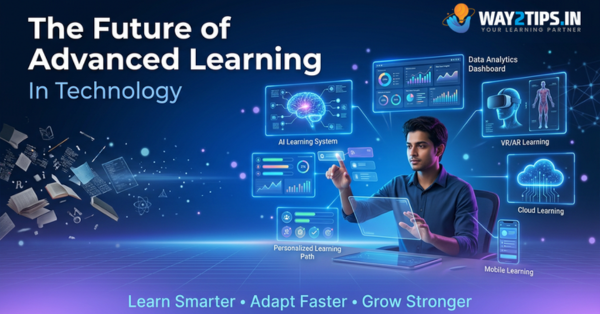
The future of advanced learning in technology is rapidly evolving, transforming how people acquire knowledge, develop skills, and prepare for careers. With the rise of digital tools, artificial intelligence, and immersive technologies, learning is no longer limited to classrooms or traditional methods. Instead, it is becoming more personalized, flexible, and deeply connected to real-world applications. As industries continue to change, advanced learning systems are adapting to meet the demands of a fast-paced, technology-driven world.
1. The Rise of Artificial Intelligence in Learning
Artificial Intelligence (AI) is at the core of modern advanced learning. It enables systems to analyze learners’ behavior, understand their strengths and weaknesses, and deliver customized content.
AI-powered platforms can:
- Personalize learning paths in real time
- Provide instant feedback and assessments
- Identify skill gaps and suggest improvements
This level of personalization ensures that learners progress at their own pace, improving engagement and outcomes. Studies show that AI-driven learning systems can adapt content dynamically, helping learners grasp complex concepts more effectively.
2. Hyper-Personalized and Adaptive Learning
One of the most significant trends is hyper-personalized learning. Unlike traditional education, where everyone follows the same curriculum, advanced learning systems tailor content to individual needs.
Key features include:
- Adaptive learning platforms
- Smart recommendations based on performance
- Customized assessments
These systems use data analytics to continuously improve learning experiences. As a result, education becomes more efficient, inclusive, and learner-centric.
3. Immersive Learning with VR and AR
Virtual Reality (VR) and Augmented Reality (AR) are revolutionizing the way learners interact with information. Instead of reading or watching, learners can experience concepts in a simulated environment.
Examples include:
- Medical students performing virtual surgeries
- Engineering students exploring 3D models
- History students walking through ancient civilizations
These technologies enhance understanding by providing hands-on, experiential learning. As costs decrease, VR and AR are expected to become mainstream in education and training.
4. Data-Driven Learning and Predictive Analytics
Advanced learning systems rely heavily on data. Predictive analytics helps educators and organizations understand learner behavior and predict future performance.
Benefits include:
- Early identification of struggling learners
- Personalized interventions
- Improved learning outcomes
By analyzing real-time data, institutions can shift from reactive to proactive learning strategies, ensuring better success rates.
5. The Growth of Lifelong Learning
In the modern world, learning does not stop after formal education. Continuous learning has become essential due to rapid technological advancements.
Professionals are increasingly:
- Upskilling and reskilling regularly
- Learning new technologies like AI and data science
- Participating in online courses and certifications
Recent trends show that learning new tech skills, especially AI, is becoming a major focus for career growth and personal development.
6. Flexible and Hybrid Learning Models
The future of learning is flexible. Hybrid learning models combine online and offline education, giving learners more control over how and when they learn.
Advantages include:
- Access to global resources
- Self-paced learning
- Better work-life balance
Digital platforms and cloud-based systems make learning accessible anytime, anywhere, breaking geographical barriers.
7. Focus on Skills Over Degrees
The traditional focus on degrees is shifting toward skills-based learning. Employers now prioritize practical skills and real-world experience.
Key changes include:
- Emphasis on coding, analytics, and digital skills
- Project-based and experiential learning
- Industry-relevant certifications
This shift ensures that learners are job-ready and adaptable to changing industry demands.
8. Integration of Emerging Technologies
Advanced learning is increasingly integrating technologies such as:
- Internet of Things (IoT)
- Robotics
- Blockchain
- Cloud computing
These technologies create interactive and innovative learning environments, preparing students for future challenges. They also encourage creativity, critical thinking, and problem-solving skills.
9. The Changing Role of Educators
In the future, educators will not just be knowledge providers but facilitators and mentors. Technology will handle routine tasks like grading and content delivery, allowing teachers to focus on:
- Guiding students
- Encouraging critical thinking
- Providing emotional and social support
This transformation enhances the overall learning experience and makes education more meaningful.
10. Challenges and Considerations
While advanced learning offers many benefits, it also comes with challenges:
- Data privacy and security concerns
- Digital divide and accessibility issues
- Need for continuous technological updates
Ensuring ethical use of technology and equal access to learning resources will be crucial for sustainable growth.
Role of Cloud Technology in Learning
Cloud computing plays a crucial role in delivering advanced learning experiences. It enables access to learning materials from anywhere in the world.
Advantages:
- Easy access to resources
- Secure data storage
- Scalability for institutions and businesses
Cloud-based platforms ensure uninterrupted learning even in remote areas.
Certification and Industry Recognition
With the growth of online learning, certifications have become more valuable than ever. Many platforms now offer industry-recognized certifications that improve career opportunities.
Importance:
- Enhances resume value
- Demonstrates practical skills
- Increases job opportunities
Employers are increasingly accepting certifications as proof of expertise.
Mobile Learning (m-Learning)
Smartphones are transforming the way people learn. Mobile learning allows users to access courses, videos, and study materials on the go.
Key benefits:
- Learn anytime, anywhere
- User-friendly interfaces
- Ideal for working professionals and students
Mobile apps are making education more accessible and convenient.
Conclusion
The future of advanced learning in technology is dynamic, innovative, and full of opportunities. With the integration of AI, immersive technologies, and data-driven systems, learning is becoming more personalized, accessible, and effective. As industries evolve, continuous learning and adaptability will be essential for success.
In this new era, education is not just about acquiring knowledge—it is about developing skills, embracing change, and preparing for a future driven by technology.
About the Author