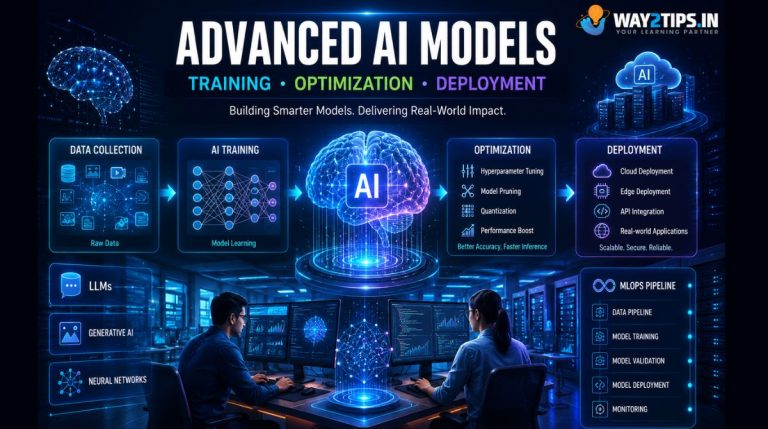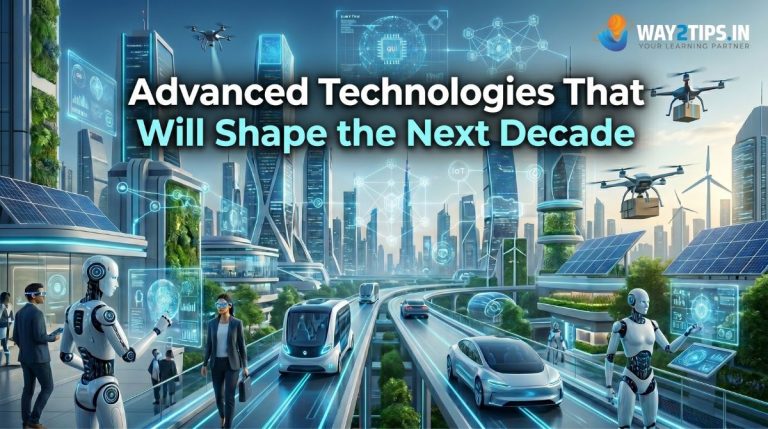

Artificial Intelligence (AI) is rapidly transforming the world. From powering smartphones and search engines to optimizing healthcare and autonomous vehicles, AI’s influence is expanding across every sector. But what does the future hold? This article explores where AI is heading, the opportunities and challenges it presents, and how society might adapt in the coming decades.
1. What Is AI and Why It Matters
Artificial Intelligence refers to computer systems capable of performing tasks that traditionally require human intelligence—such as reasoning, learning, perception, language understanding, and problem-solving. AI is not just a single technology; it’s a suite of capabilities including:
- Machine Learning (ML)
- Deep Learning
- Natural Language Processing (NLP)
- Computer Vision
- Robotics
- AI in health and fitness industry
AI matters because it can automate processes, uncover insights from data, and augment human abilities—potentially leading to significant advancements in productivity and innovation.
2. Key Trends Shaping the Future of AI
a. Ubiquitous AI Integration
AI will continue to become embedded in everyday products and services:
- Intelligent assistants that understand context.
- Personalized learning in education.
- Predictive maintenance in industry.
- Smart health diagnostics.
AI won’t be a separate “tool”—it will be woven into the fabric of digital systems.
b. Next-Generation NLP and Communication
Language models are advancing rapidly. Future systems will:
- Understand nuance and context better.
- Translate languages seamlessly.
- Generate highly coherent creative content.
- Engage in more natural, conversational interaction.
This will redefine how humans interact with machines.
c. Autonomous Systems and Robotics
Progress in robotics and AI will drive:
- Self-driving vehicles.
- Drones for logistics and emergency response.
- Robotics in manufacturing, healthcare, and homes.
Autonomy will expand into more complex environments.
d. Edge AI and Real-Time Intelligence
Instead of relying solely on cloud computing, AI will run on local devices (“edge AI”), enabling:
- Faster responses.
- Reduced data transmission costs.
- More privacy-preserving computation.
This trend is critical for IoT, wearable devices, and autonomous machines.
e. AI in Scientific Discovery
AI will turbocharge research:
- Predict new molecules and accelerate drug discovery.
- Model climate systems with greater accuracy.
- Help decode genetic information.
- Future of artificial intelligence explained.
AI will function as a powerful collaborator for scientists.
3. Economic and Workforce Impacts
Opportunities
- New job categories: AI specialists, data strategists, AI ethicists, etc.
- Enhanced productivity across industries.
- Creation of new products and services.
AI could contribute trillions to the global economy.
Challenges
- Automation may displace certain jobs, especially routine tasks.
- Skill gaps could widen inequality.
- Workforce adaptation will require lifelong learning and reskilling programs.
Policy responses will be critical to smooth this transition.
4. Ethical and Social Considerations
AI’s growth raises pressing questions:
a. Fairness and Bias
AI systems can reflect and amplify societal biases present in training data. Ensuring fairness requires:
- Diverse datasets.
- Auditable systems.
- Accountability for discriminatory outcomes.
b. Privacy and Surveillance
AI’s ability to analyze data can conflict with individual privacy. Governments and companies must balance innovation with protections.
c. Accountability
When AI systems make decisions—especially in areas like healthcare or criminal justice—clarity on responsibility is essential.
d. Transparency
Black-box AI systems make explanation challenging. Explainable AI (XAI) will be vital for trust.
5. Risks and Long-Term Concerns
a. Security Risks
AI can be used to:
- Create sophisticated cyberattacks.
- Automate misinformation campaigns.
- Design harmful biological agents.
- Web Development and SEO.
Safeguards are urgently needed.
b. Alignment and Control
As AI systems become more capable, ensuring they act in alignment with human values is a central research area. Misaligned AI—systems that pursue goals harmful to humans—poses long-term risks.
Leading thinkers debate AI safety frameworks, including:
- Robust testing environments.
- Ethical guardrails.
- Global cooperation on standards.
6. AI Governance and Regulation
Governments worldwide are beginning to regulate AI:
- The EU’s AI Act proposes risk-based rules for AI systems.
- Other nations are developing policies for safe deployment, data protection, and transparency.
Balanced regulation can:
- Protect citizens.
- Encourage innovation.
- Prevent misuse.
International collaboration will be key for cross-border challenges.
7. Human-AI Collaboration
AI’s future is not about replacement—it’s about augmentation. Examples include:
- Medicine: AI assists doctors in diagnosing conditions faster and with higher accuracy.
- Education: Systems adapt to students’ learning patterns.
- Art and Creativity: AI expands creative possibilities in music, film, and literature.
AI won’t negate human value—rather, it will reshape roles toward higher-order thinking, creativity, and emotional intelligence.
8. Vision for 2030 and Beyond
By 2030:
- AI integrated in most digital services.
- Autonomous vehicles operating in limited environments.
- Healthcare diagnostics improved by AI.
- Personalized digital learning widespread.
By 2040–2050 and Beyond:
- Highly autonomous systems in complex physical environments.
- AI collaborating in scientific innovation.
- Human-machine interfaces could transform communication.
- Ethical frameworks and global governance will determine how risks are managed.
9. Conclusion
The future of AI offers immense opportunities—but also serious responsibilities. Progress will require a balanced approach that:
- Encourages innovation.
- Protects human rights and dignity.
- Promotes fairness and accountability.
- Ensures economic inclusion and opportunity.
About the Author