

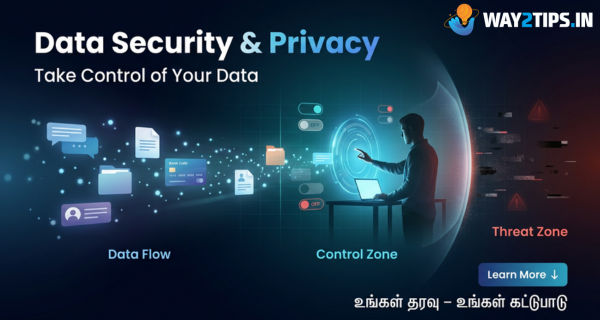
In today’s digital world, data security and privacy have become essential aspects of our daily lives. From social media and online banking to shopping and communication, we constantly share personal information online. Protecting this data is critical to prevent misuse, theft, and unauthorized access.
What is Data Security?
Data Security refers to the process of protecting digital information from unauthorized access, corruption, or theft. It involves implementing various technologies and practices to safeguard sensitive data.
Key Objectives of Data Security:
- Prevent unauthorized access to data
- Protect data from breaches and cyberattacks
- Ensure data integrity (data remains accurate and unchanged)
- Maintain availability of data for authorized users
Examples of Data Security:
- Encryption of files and communications
- Password protection and authentication systems
- Firewalls and antivirus software
What is Privacy?
Privacy refers to an individual’s right to control how their personal information is collected, used, and shared. It ensures that personal data is handled responsibly and ethically.
Examples of Privacy:
- Keeping your messages and emails confidential
- Controlling who can view your personal information
- Managing app permissions and data sharing
Difference Between Data Security and Privacy
| Data Security | Privacy |
|---|---|
| Focuses on protecting data from breaches | Focuses on protecting user rights |
| Uses technical tools (encryption, firewalls) | Based on policies and ethical practices |
| Prevents unauthorized access | Controls how data is collected and used |
Common Threats to Data Security and Privacy
In the modern digital environment, several threats can compromise your data:
- Hacking – Unauthorized access to systems
- Phishing – Fake emails or messages to steal information
- Malware – Malicious software like viruses and spyware
- Data Breaches – Large-scale leakage of sensitive information
- Identity Theft – Using someone else’s personal details for fraud
Best Practices for Data Security
1. Use Strong Passwords
- Combine letters, numbers, and symbols
- Avoid using common or predictable passwords
2. Enable Two-Factor Authentication (2FA)
- Adds an extra layer of security beyond passwords
3. Encrypt Sensitive Data
- Converts data into unreadable format for unauthorized users
4. Keep Software Updated
5. Use Secure Networks
- Avoid public Wi-Fi for sensitive transactions
Tips to Protect Your Privacy
- Review app permissions before installing
- Avoid sharing too much personal information online
- Adjust privacy settings on social media
- Do not click on unknown or suspicious links
- Regularly clear cookies and browsing data
Data Protection Laws
Governments around the world have introduced laws to protect user data:
- GDPR (General Data Protection Regulation) – European Union
- IT Act 2000 – India
- CCPA (California Consumer Privacy Act) – United States
These laws ensure that organizations handle personal data responsibly and transparently.
Importance of Data Security and Privacy
- Increasing number of cyberattacks
- Growth of digital transactions and online services
- Risk of financial and identity theft
- Need to protect personal and organizational data
Conclusion
Data security and privacy are fundamental in the digital age. While organizations are responsible for protecting user data, individuals must also take proactive steps to safeguard their information.
By following best practices such as using strong passwords, enabling two-factor authentication, and being cautious online, you can significantly reduce the risk of data breaches and protect your personal privacy.
About the Author