
Software development has evolved significantly over the past decade. Modern applications are more complex, scalable, and distributed than ever before. While junior developers focus on learning programming languages and frameworks, senior developers are expected to understand deeper programming concepts that enable them to design robust, maintainable, and high-performance systems.
Mastering advanced programming concepts not only improves coding skills but also enhances problem-solving abilities, system design expertise, and leadership capabilities. In this article, we’ll explore the essential advanced programming concepts every senior developer should master.
1. Design Patterns
Design patterns provide proven solutions to common software design problems. They help developers create reusable, scalable, and maintainable code.
Popular design patterns include:
Creational Patterns
- Singleton
- Factory Method
- Abstract Factory
- Builder
- Prototype
Structural Patterns
- Adapter
- Facade
- Decorator
- Composite
Behavioral Patterns
- Observer
- Strategy
- Command
- State
- Mediator
Understanding when and how to use these patterns is a hallmark of experienced developers.
2. Object-Oriented Design Principles (SOLID)
The SOLID principles help developers create flexible and maintainable software architectures.
S – Single Responsibility Principle
A class should have only one reason to change.
O – Open/Closed Principle
Software entities should be open for extension but closed for modification.
L – Liskov Substitution Principle
Derived classes should be replaceable with their base classes.
I – Interface Segregation Principle
Clients should not depend on interfaces they do not use.
D – Dependency Inversion Principle
High-level modules should depend on abstractions rather than implementations.
Applying SOLID principles significantly improves software quality.
3. Data Structures and Algorithms
Senior developers should possess deep knowledge of advanced data structures and algorithms.
Important topics include:
- Graph Algorithms
- Dynamic Programming
- Trie Structures
- Segment Trees
- Hash Tables
- Heaps
- Priority Queues
- Balanced Trees
- Recursion Optimization
Efficient algorithms improve application performance and scalability.
4. Concurrency and Multithreading
Modern applications often perform multiple operations simultaneously.
Key concepts include:
- Threads
- Processes
- Thread Pools
- Synchronization
- Locks and Mutexes
- Deadlock Prevention
- Race Conditions
- Parallel Computing
- Asynchronous Programming
Understanding concurrency is essential for building high-performance applications.
5. Distributed Systems
Most modern applications operate across multiple servers and cloud environments.
Important distributed system concepts include:
- Load Balancing
- Service Discovery
- Distributed Caching
- Event-Driven Architecture
- Message Queues
- Data Replication
- Fault Tolerance
- Consensus Algorithms
Senior developers must understand how systems behave at scale.
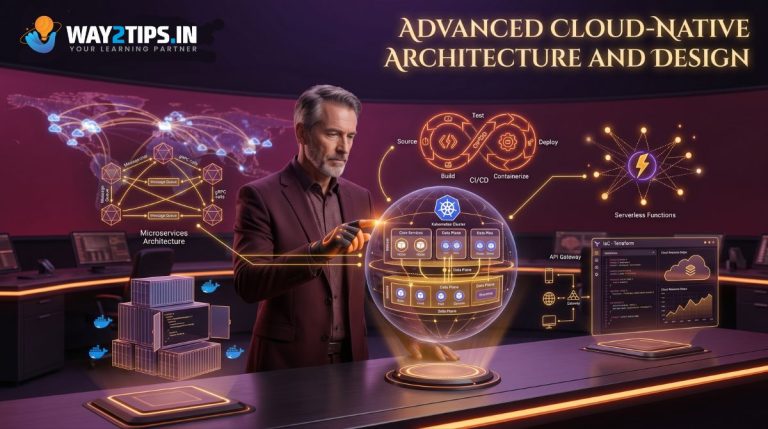
6. Microservices Architecture
Microservices have become a dominant architectural style.
Benefits include:
- Independent Deployment
- Scalability
- Technology Flexibility
- Improved Fault Isolation
Key considerations:
- API Gateway
- Service Communication
- Data Management
- Monitoring
- Security
Successfully implementing microservices requires strong architectural knowledge.
7. Database Optimization
Database performance directly impacts application responsiveness.
Advanced topics include:
SQL Optimization
- Query Tuning
- Indexing
- Execution Plans
NoSQL Databases
- MongoDB
- Cassandra
- Redis
- DynamoDB
Data Modeling
- Normalization
- Denormalization
- Partitioning
- Sharding
Efficient database design ensures optimal performance under heavy workloads.
8. System Design
System design is one of the most critical skills for senior developers.
Areas to master:
- Scalability
- Availability
- Reliability
- Performance
- Security
- Cost Optimization
Examples:
- Designing a Social Media Platform
- Video Streaming Service
- E-commerce Application
- Real-Time Chat System
Strong system design skills are highly valued in technical leadership roles.
9. Cloud Computing and DevOps
Cloud platforms have transformed software deployment and operations.
Essential technologies include:
Cloud Platforms
- AWS
- Microsoft Azure
- Google Cloud Platform
DevOps Tools
- Docker
- Kubernetes
- Jenkins
- GitHub Actions
- Terraform
Understanding cloud-native development is crucial in modern software engineering.
10. API Design and Integration
Modern applications rely heavily on APIs.
Important concepts include:
- REST APIs
- GraphQL
- gRPC
- API Versioning
- Authentication
- Rate Limiting
- API Security
Well-designed APIs improve maintainability and developer experience.
11. Security Best Practices
Security should be integrated into every stage of software development.
Key areas include:
- Authentication
- Authorization
- Encryption
- Secure Coding
- OWASP Top 10
- Input Validation
- Session Management
A senior developer must identify and mitigate security risks proactively.
12. Performance Optimization
High-performing applications deliver better user experiences.
Optimization techniques include:
- Profiling
- Memory Management
- Caching
- Lazy Loading
- Code Optimization
- Database Tuning
Performance analysis should be a regular part of development workflows.
13. Event-Driven Architecture
Many large-scale systems rely on events for communication.
Technologies include:
- Apache Kafka
- RabbitMQ
- Amazon SQS
- Event Streams
Benefits include:
- Scalability
- Loose Coupling
- Real-Time Processing
Event-driven systems are increasingly important in cloud-native applications.
14. Software Architecture Patterns
Senior developers should understand multiple architectural approaches.
Examples:
- Layered Architecture
- Hexagonal Architecture
- Clean Architecture
- Event-Driven Architecture
- Serverless Architecture
Choosing the right architecture impacts long-term project success.
15. Artificial Intelligence and Automation
AI is becoming an integral part of modern software solutions.
Developers should understand:
- Machine Learning Fundamentals
- AI APIs
- Generative AI Integration
- Intelligent Automation
- Predictive Analytics
AI knowledge can provide a significant competitive advantage.
Common Mistakes Senior Developers Should Avoid
Even experienced developers can encounter challenges such as:
- Overengineering Solutions
- Ignoring Scalability Requirements
- Poor Documentation
- Inadequate Testing
- Security Oversights
- Technical Debt Accumulation
Avoiding these pitfalls improves software quality and team productivity.
Career Benefits of Mastering Advanced Programming Concepts
Developers who master these concepts can:
- Lead Complex Projects
- Design Scalable Systems
- Improve Application Performance
- Mentor Junior Developers
- Advance Into Technical Leadership Roles
- Increase Career Opportunities
These skills are highly valued across startups, enterprises, and technology companies.
Conclusion
Senior developers are expected to go beyond writing code. They must understand architecture, scalability, security, optimization, cloud computing, distributed systems, and modern software engineering practices. Mastering these advanced programming concepts enables developers to build reliable, maintainable, and high-performance applications while preparing them for leadership roles in the ever-evolving technology industry.
About the Author