
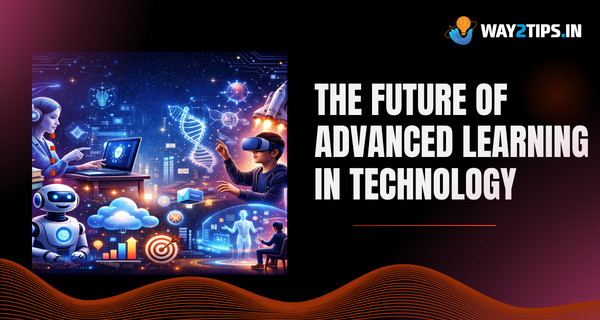
The world of education is undergoing a powerful transformation driven by rapid technological advancements. From Artificial Intelligence (AI) to immersive virtual environments, advanced learning is no longer limited to classrooms or textbooks. Instead, it is evolving into a dynamic, personalized, and technology-driven ecosystem that prepares learners for the future workforce.
Introduction
Advanced learning in technology refers to the integration of modern digital tools, intelligent systems, and innovative methodologies into education. This transformation is reshaping how students learn, how teachers teach, and how institutions operate. As industries become more technology-oriented, education must adapt to ensure learners acquire relevant skills.
1. AI-Powered Personalized Learning
One of the most significant advancements in education is personalized learning through AI. Traditional “one-size-fits-all” teaching methods are being replaced by systems that adapt to each learner’s pace, style, and understanding.
- AI analyzes student performance in real time
- It identifies strengths and weaknesses
- Provides customized content and recommendations
Studies show that AI-driven adaptive learning improves engagement and outcomes significantly, as it tailors education to individual needs .
👉 Example: If a student struggles with a concept, AI tools provide extra practice and simplified explanations instead of moving forward too quickly.
2. AI Tutors and Virtual Assistants
AI-powered tutors are becoming common in modern education systems. These digital assistants can:
- Answer questions instantly
- Provide explanations 24/7
- Help with assignments and practice
By 2026, a large percentage of institutions are expected to adopt AI teaching assistants, helping both students and teachers save time and improve efficiency .
3. Data-Driven Learning & Smart Assessment
Advanced learning systems now use data analytics to improve education quality.
- Real-time feedback on student performance
- Automated grading systems
- Predictive analytics to identify learning gaps
This allows educators to make informed decisions and provide targeted support, improving overall learning outcomes .
4. Immersive Learning (AR, VR & Metaverse)
Technologies like Augmented Reality (AR) and Virtual Reality (VR) are transforming education into an interactive experience.
- Virtual labs for science experiments
- 3D simulations for medical training
- Historical events recreated in virtual environments
These immersive tools make learning more engaging and practical, helping students understand complex concepts easily.
5. Cloud-Based & Global Learning Platforms
Cloud technology has made education accessible worldwide. Learners can now:
- Access courses anytime, anywhere
- Collaborate with global peers
- Learn from top universities online
Modern learning ecosystems are becoming cloud-based, scalable, and inclusive, enabling equal opportunities for students across regions .
6. Gamification and Interactive Learning
Gamification integrates game elements into education to make learning fun and engaging.
- Points, badges, and leaderboards
- Interactive quizzes and challenges
- Simulation-based learning
This approach increases motivation and improves retention, especially among younger learners.
7. Lifelong Learning & Skill-Based Education
The future of education is not limited to schools and colleges. Continuous learning is becoming essential.
- Online certifications and micro-credentials
- Skill-based training programs
- Industry-focused courses
Digital learning platforms support lifelong learning, helping individuals stay updated with evolving technologies .
8. Integration with Industry & Careers
Education is increasingly aligned with industry requirements.
- Courses designed with industry collaboration
- Real-world projects and internships
- Focus on skills like AI, cybersecurity, and data science
This ensures that students are job-ready and capable of meeting modern workplace demands.
9. Challenges in Advanced Learning
Despite its benefits, advanced learning faces several challenges:
- Data privacy and security concerns
- Over-reliance on technology
- Digital marketing
- Ethical concerns in AI usage
Educational institutions must address these issues to ensure fair and effective learning environments.
10. The Future Outlook
The future of advanced learning will be:
- Highly personalized – Tailored to individual learners
- AI-driven – Intelligent systems guiding education
- Immersive – Learning through simulations and virtual worlds
- Flexible – Accessible anytime, anywhere
- Skill-focused – Aligned with real-world needs
AI will not replace teachers but will enhance their role, allowing them to focus more on mentorship and creativity.
Conclusion
The future of advanced learning in technology is transformative and promising. With AI, cloud computing, and immersive technologies leading the way, education is becoming smarter, more accessible, and more effective.
To succeed in this evolving landscape, learners must embrace continuous learning, adapt to new technologies, and develop critical thinking skills. Institutions, on the other hand, must ensure ethical implementation and equal access to these innovations.
👉 In simple terms, the future of learning is not just digital — it is intelligent, personalized, and limitless.
About the Author