
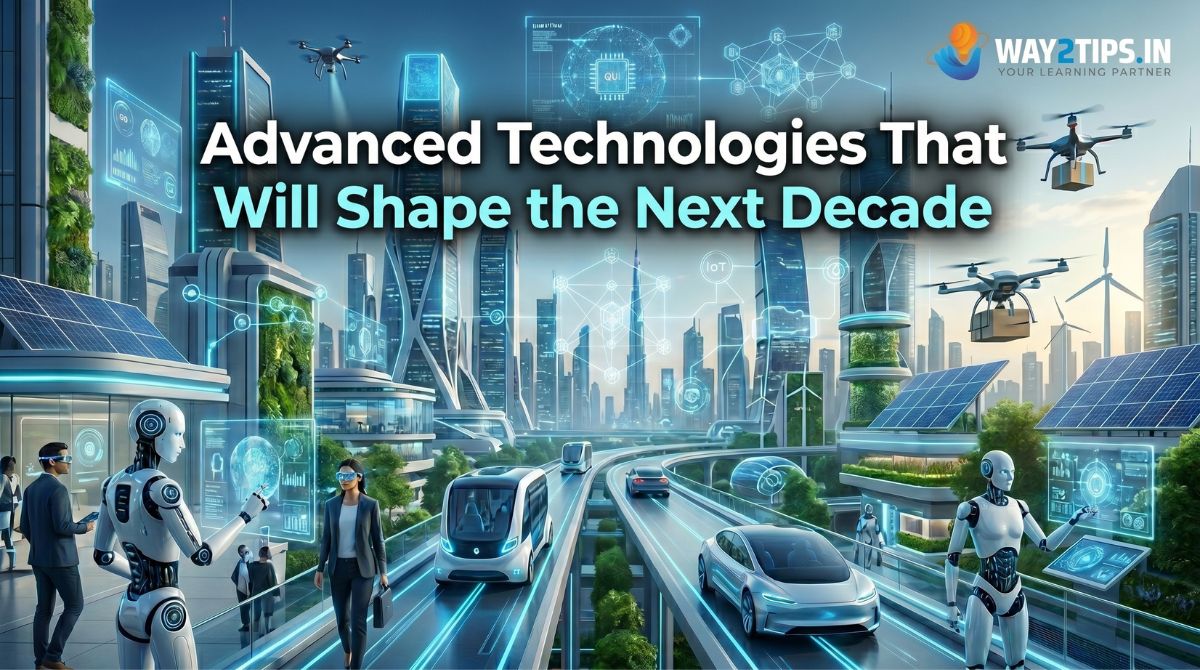
Technology is evolving at an unprecedented pace, transforming the way we live, work, communicate, and solve global challenges. Over the next decade, several groundbreaking innovations are expected to redefine industries, create new opportunities, and improve everyday life. From artificial intelligence to quantum computing, these advanced technologies will play a crucial role in shaping the future.
1. Artificial Intelligence (AI) and Machine Learning
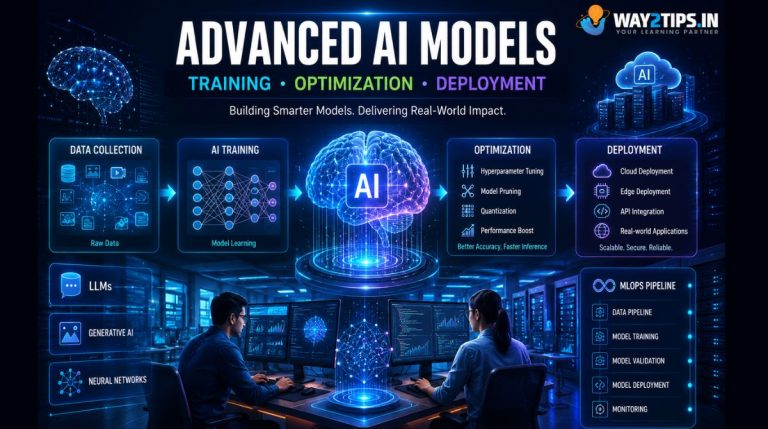
Artificial Intelligence has already become a part of daily life through virtual assistants, recommendation systems, and automated customer support. In the coming decade, AI will become even more sophisticated, enabling businesses to automate complex tasks, improve decision-making, and enhance customer experiences.
Machine learning algorithms will continue to learn from massive amounts of data, helping industries such as healthcare, finance, education, and manufacturing operate more efficiently. AI-powered diagnostics, personalized learning platforms, and predictive analytics are expected to become standard tools across multiple sectors.
2. Quantum Computing
Quantum computing represents one of the most revolutionary technological advancements of the 21st century. Unlike traditional computers that process information using bits, quantum computers use quantum bits or qubits, allowing them to solve complex problems exponentially faster.
Over the next decade, quantum computing could transform drug discovery, financial modeling, cybersecurity, and scientific research. Although still in its early stages, major technology companies are investing heavily in making quantum computing commercially viable.
3. 5G and Future Connectivity
The global rollout of 5G networks is already improving internet speeds and reducing latency. As 5G becomes widely available, it will enable seamless communication between billions of connected devices.
Future generations of wireless technology will support smart cities, autonomous vehicles, remote healthcare services, and advanced industrial automation. Faster and more reliable connectivity will serve as the foundation for many emerging technologies.
4. Internet of Things (IoT)
The Internet of Things connects everyday devices to the internet, allowing them to collect and exchange data. Smart homes, wearable devices, connected vehicles, and industrial sensors are just a few examples of IoT applications.
In the next decade, IoT ecosystems will become more intelligent and integrated, helping businesses optimize operations while improving convenience and efficiency for consumers.
5. Robotics and Automation
Advanced robotics will continue transforming industries by performing tasks with greater speed, precision, and safety. Manufacturing facilities, warehouses, healthcare institutions, and agricultural operations are increasingly adopting robotic solutions.
Collaborative robots, also known as cobots, will work alongside humans to improve productivity while reducing repetitive and hazardous tasks. Automation will help businesses meet growing demands while maintaining operational efficiency.
6. Extended Reality (XR): AR, VR, and Mixed Reality
Extended Reality combines Augmented Reality (AR), Virtual Reality (VR), and Mixed Reality (MR) to create immersive digital experiences.
These technologies will revolutionize education, healthcare, gaming, training, and remote collaboration. Businesses will use virtual environments for employee training, product design, and customer engagement, while consumers will enjoy more immersive entertainment experiences.
7. Blockchain Technology
Blockchain technology offers a decentralized and secure method of recording transactions. While commonly associated with cryptocurrencies, its potential extends far beyond digital currencies.
In the coming years, blockchain will improve supply chain transparency, digital identity verification, healthcare record management, and secure financial transactions. Its ability to enhance trust and security makes it a valuable tool for numerous industries.
8. Biotechnology and Genetic Engineering
Advancements in biotechnology are opening new possibilities for healthcare, agriculture, and environmental sustainability. Gene-editing technologies such as CRISPR are enabling scientists to address genetic disorders and develop innovative medical treatments.
Biotechnology could also help create disease-resistant crops, improve food security, and support environmental conservation efforts over the next decade.
9. Renewable Energy and Energy Storage
As the world focuses on reducing carbon emissions, renewable energy technologies will continue to advance rapidly. Solar panels, wind turbines, and next-generation batteries are becoming more efficient and affordable.
Innovations in energy storage will allow renewable energy sources to provide consistent power, accelerating the global transition toward cleaner and more sustainable energy systems.
10. Autonomous Vehicles and Smart Transportation
Self-driving vehicles are expected to significantly impact transportation in the coming years. Advances in AI, sensors, and connectivity will enable safer and more efficient transportation systems.
Smart transportation networks will reduce traffic congestion, improve fuel efficiency, and enhance road safety. Autonomous delivery services and intelligent public transportation systems may become common in urban areas.
Challenges and Ethical Considerations
While advanced technologies offer tremendous opportunities, they also present challenges. Privacy concerns, cybersecurity risks, workforce displacement, and ethical issues surrounding AI and genetic engineering must be carefully addressed.
Governments, businesses, and technology leaders will need to collaborate to establish responsible policies and frameworks that ensure innovation benefits society as a whole.
Conclusion
The next decade promises to be one of the most transformative periods in technological history. Artificial intelligence, quantum computing, biotechnology, robotics, blockchain, and other emerging technologies will reshape industries and redefine everyday life.
Organizations and individuals who embrace these innovations will be better positioned to adapt, compete, and thrive in an increasingly digital world. Understanding these technological trends today can help prepare for the opportunities and challenges of tomorrow.
About the Author