

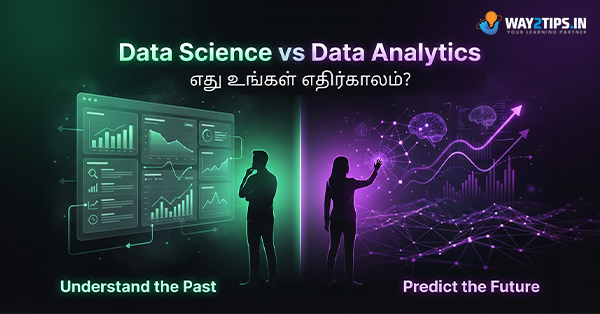
In today’s digital era, data has become one of the most valuable assets for businesses and organizations. Every second, massive amounts of data are generated from social media, mobile apps, e-commerce platforms, banking systems, and IoT devices. To extract meaningful insights from this data, two major fields are widely used: Data Science and Data Analytics.
Although these terms are often used interchangeably, they are not the same. Each has its own purpose, tools, and career paths. This article provides a complete comparison to help you clearly understand both fields.
🔹 What is Data Science?
Data Science is a broad, multidisciplinary field that combines programming, mathematics, statistics, and machine learning to extract knowledge and build predictive systems from data.
It focuses not only on analyzing data but also on predicting future trends and automating decision-making processes.
Key Functions of Data Science:
- Collecting and processing large datasets
- Handling structured and unstructured data
- Building predictive models
- Using machine learning and AI techniques
- Creating data-driven products and solutions
Simple Definition:
Data Science = Data + Algorithms + Prediction
🔹 What is Data Analytics?
Data Analytics is the process of examining datasets to draw conclusions and support decision-making. It mainly deals with analyzing historical and current data.
The goal is to identify patterns, trends, and insights that help businesses make informed decisions.
Key Functions of Data Analytics:
- Data cleaning and preparation
- Data visualization (charts, dashboards)
- Identifying trends and patterns
- Generating reports
- Supporting business decisions
Simple Definition:
Data Analytics = Data + Analysis + Insights
🔹 Types of Data Analytics
Data Analytics is further divided into four main types:
- Descriptive Analytics – What happened?
- Diagnostic Analytics – Why did it happen?
- Predictive Analytics – What might happen?
- Prescriptive Analytics – What should be done?
🔹 Key Differences Between Data Science and Data Analytics
| Feature | Data Science | Data Analytics |
|---|---|---|
| Scope | Broad field | Narrow and specific |
| Focus | Future predictions | Past and present insights |
| Data Type | Structured + Unstructured | Mostly Structured |
| Techniques | Machine Learning, AI | Statistics, Visualization |
| Goal | Build models and predictions | Support decision-making |
| Complexity | High | Moderate |
| Role | Data Scientist | Data Analyst |
Key Insight:
- Data Analyst: Focuses on “What happened?”
- Data Scientist: Focuses on “What will happen?”
🔹 Skills Required
Data Science Skills:
- Programming (Python, R)
- Machine Learning & AI
- Advanced Statistics
- Data Engineering basics
- Big Data tools (Hadoop, Spark)
Data Analytics Skills:
- Excel
- SQL
- Data Visualization tools (Power BI, Tableau)
- Basic Statistics
- Business understanding
🔹 Tools Used
Data Science Tools:
- Python
- R
- TensorFlow
- Apache Spark
- Jupyter Notebook
Data Analytics Tools:
- Microsoft Excel
- Power BI
- Tableau
- SQL
- Google Analytics
🔹 Career Opportunities
Data Science Careers:
- Data Scientist
- Machine Learning Engineer
- AI Engineer
- Data Engineer
Data Analytics Careers:
- Data Analyst
- Business Analyst
- Marketing Analyst
- Financial Analyst
Salary Insight:
- Data Science roles generally offer higher salaries due to advanced skill requirements.
- Data Analytics roles are easier to enter for beginners.
🔹 When to Choose What?
Choose Data Analytics if:
- You prefer less coding
- You want a faster entry into the job market
- You enjoy working with reports and dashboards
- You are interested in business decision-making
Choose Data Science if:
- You enjoy programming and algorithms
- You are interested in AI and Machine Learning
- You want to build predictive models
- You aim for high-level technical roles
🔹 Relationship Between Data Science and Data Analytics
Data Analytics is actually a part of Data Science.
- Data Science = Bigger picture
- Data Analytics = Specific component
A Data Scientist often performs analytics, but a Data Analyst may not necessarily build machine learning models.
🔹 Advantages of Each Field
Data Science:
✔ High demand and salary
✔ Advanced career growth
✔ Opportunities in AI and innovation
Data Analytics:
✔ Easier to learn
✔ Quick job opportunities
✔ Strong demand across industries
🔹 Final Thought
Both Data Science and Data Analytics play a crucial role in today’s data-driven world.
- Data Analytics helps businesses understand past and current data to make better decisions.
- Data Science goes beyond that by predicting the future and building intelligent systems.
“Data Analytics explains the past, while Data Science predicts the future.”
About the Author