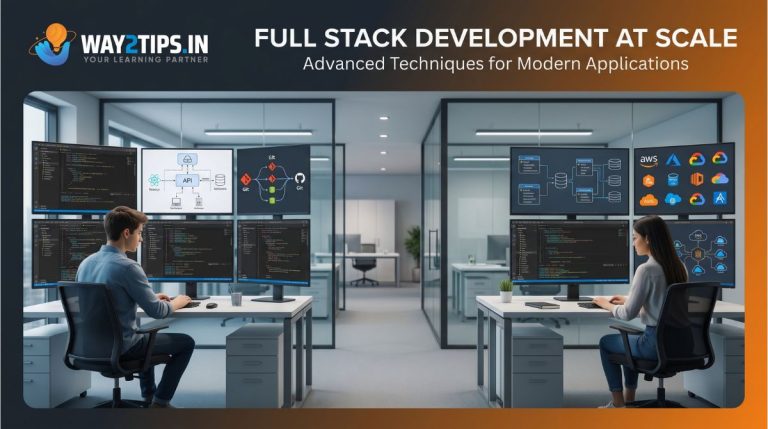

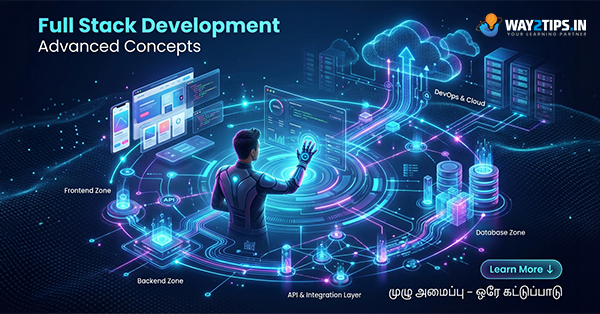
Full Stack Development refers to the ability to work on both the front-end (client side) and back-end (server side) of a web application. A Full Stack Developer is skilled in designing user interfaces, managing databases, handling server logic, and ensuring seamless communication between all parts of an application. In today’s fast-growing tech industry, full stack development has become one of the most in-demand skills.
What is Full Stack Development?
Full Stack Development involves working with the complete stack of technologies required to build a web application. This includes everything from designing the layout and user experience to handling server operations and database management. A full stack developer understands how each layer of the application interacts and ensures the entire system works efficiently.
Front-End Development
Front-end development focuses on the visual and interactive aspects of a website or application. It is what users see and interact with directly. Key technologies used in front-end development include:
- HTML (HyperText Markup Language): Structures the content of web pages
- CSS (Cascading Style Sheets): Styles and designs the layout
- JavaScript: Adds interactivity and dynamic behavior
Modern front-end development also involves frameworks and libraries such as React, Angular, and Vue.js, which help developers build fast, responsive, and user-friendly interfaces.
Back-End Development
Back-end development deals with the server, database, and application logic. It ensures that the front-end receives the correct data and functions properly. Common back-end technologies include:
- Programming Languages: JavaScript (Node.js), Python, Java, PHP
- Frameworks: Express.js, Django, Spring Boot
- Databases: MySQL, MongoDB, PostgreSQL
The back-end handles user authentication, data processing, and server communication.
Database Management
Databases are essential for storing and retrieving application data. Full stack developers work with both relational and non-relational databases:
- Relational Databases: MySQL, PostgreSQL
- NoSQL Databases: MongoDB, Firebase
Efficient database design and query optimization are crucial for performance and scalability.
Version Control Systems
Version control tools like Git help developers track changes in code, collaborate with teams, and manage different versions of a project. Platforms like GitHub and GitLab are widely used for hosting and sharing code repositories.
APIs and Integration
APIs (Application Programming Interfaces) allow different systems to communicate with each other. Full stack developers often work with:
- REST APIs: Standard method for client-server communication
- GraphQL: Flexible query language for fetching specific data
APIs are essential for integrating third-party services such as payment gateways, social logins, and cloud services.
DevOps and Deployment
Modern full stack development also includes DevOps practices, which focus on automating development, testing, and deployment processes. Key concepts include:
- CI/CD (Continuous Integration/Continuous Deployment)
- Containerization using Docker
- Cloud platforms like AWS, Azure, and Google Cloud
These tools help in faster development cycles and reliable application deployment.
Security in Full Stack Development
Security is a critical aspect of web development. Developers must protect applications from common threats such as:
- Cross-Site Scripting (XSS)
- Cross-Site Request Forgery (CSRF)
- SQL Injection
Using HTTPS, data encryption, secure authentication methods, and proper validation techniques helps ensure application safety.
Performance Optimization
Optimizing performance is essential for delivering a smooth user experience. Techniques include:
- Code splitting and lazy loading
- Image and asset optimization
- Using Content Delivery Networks (CDNs)
- Caching mechanisms
These strategies help reduce load times and improve responsiveness.
Advantages of Full Stack Development
- Versatility: Ability to work on both front-end and back-end
- Cost-effective: One developer can handle multiple roles
- Better understanding: Complete knowledge of application flow
- High demand: Strong career opportunities in the tech industry
Challenges in Full Stack Development
While full stack development offers many benefits, it also comes with challenges:
- Continuous learning of new technologies
- Managing complex systems
- Balancing multiple responsibilities
- Keeping up with industry trends
Career Opportunities
Full stack developers are highly valued in startups and large organizations alike. Career roles include:
- Full Stack Developer
- Web Developer
- Software Engineer
- Technical Lead
With experience, developers can also move into roles like Solution Architect or Engineering Manager.
Conclusion
Full Stack Development is a powerful and versatile skill that enables developers to build complete web applications from start to finish. By mastering both front-end and back-end technologies, along with databases, APIs, security, and deployment practices, developers can create scalable, secure, and high-performance applications.
In today’s digital world, being a full stack developer provides a significant career advantage. As technology continues to evolve, those who continuously learn and adapt will find endless opportunities for growth and success in this field.
About the Author